
The Atari Panther - Part 1 - The history
The Atari Panther is a never released game console from the ‘90s. Its story is fascinating because of its connections. Its hardware is interesting for its strengths and shortcomings. Its fate is inspiring for what it could have been.
In this series of articles we’ll know more about the Atari Panther.
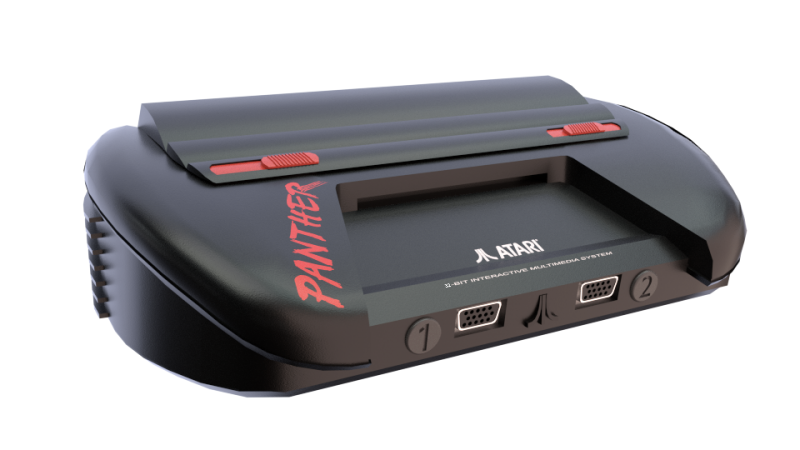 |
| A 3D rendering of the Atari Panther. Author unknown. |
Articles:
- Part 1 - The history
- Part 2 - The hardware
- Part 3 - Declared features
- Part 4 - Deep dive
- Part 5 - Fun with object lists
History
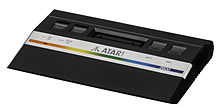
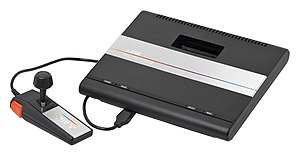
In 1989 Atari has a crowded lineup of aging 8 bit consoles (the 2600jr, the 7800, the XEGS) that are not able to contrast the very successful Nintendo NES in USA.
 |
 |
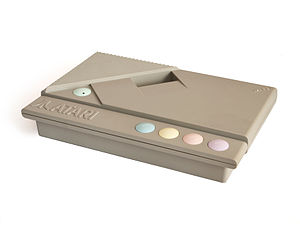 |
| Atari 2600jr | Atari 7800 | Atari XEGS |
 |
| Nintendo NES |
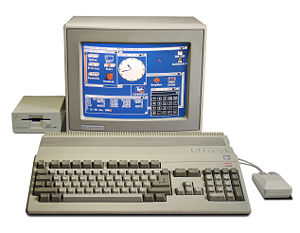
In Europe the Commodore Amiga 500 is the king and great games are continuously released. Its competitor, the Atari ST, has just a niche of the market.
 |
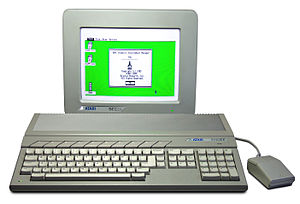 |
| Commodore Amiga 500 | Atari ST |
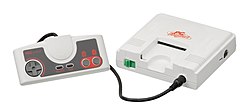
The 16 bit game console generation is rising from Japan with the NEC PC Engine released in 10/87 and the Sega Megadrive in 10/88. Atari is well aware of this.
Indeed, in 01/89 Sega contacts Atari asking to distribute the Megadrive in USA but Atari declines citing the high release price. This is the second time Atari rejects this kind of deals. It happened the same in ‘83 for the Nintendo NES.
The console hype is mounting also in Europe with Megadrive and PC Engine unofficially imported from Japan at crazy prices.
 |
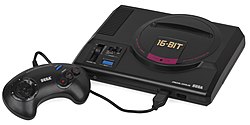 |
| NEC PC Engine | Sega Megadrive |
It is in Europe where another new console creates a lot of buzz on the specialized press. This is the Konix Multisystem. It promises Amiga level graphics, better 3D and half the price thanks to custom chips containing a Blitter and a DSP. Nevertheless the Konix Multisystem never reaches the shelves because Konix goes out of cash in 03/89, few months before the announced release date.
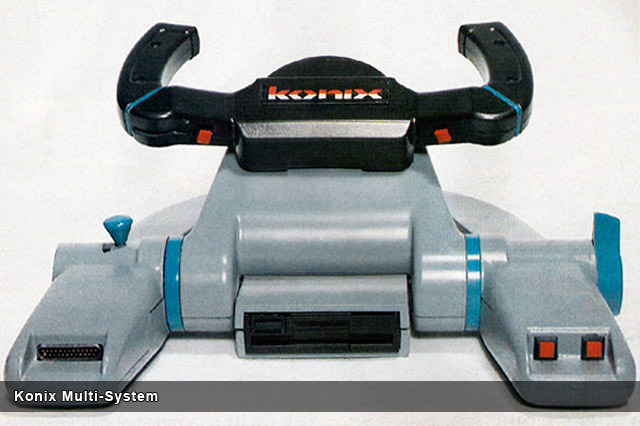 |
| Konix Multisystem |
In this scenario Atari decides that it must have a new console. A console based on the Atari STE is briefly considered but a better option is available.
The Konix Multisystem chips were designed in UK by a small unknown consulting company, Flare Technology. The founders are veterans that worked in the 8 bit home computer space at Sinclair and at Amstrad.
Two of the members of Flare Technology, Martin Brennan and John Mathieson, are contracted by Atari to work on two new consoles. Flare 2 is formed and the design of the Atari Panther and the Atari Jaguar begins in the Q1/89.
The two consoles are developed in parallel. The Jaguar is the heir of the Konix chipset being a 16/64 bit design based on framebuffer, blitter and RISC processors. The Panther is more about to productionize a concept already defined by Atari, a sort of 16/32 bit evolution of the Atari 7800.
Later in ‘89, while Atari is working on the two consoles, the Japaneses are ready to conquer the USA. In 08/89 the Sega Megadrive is released in USA as Sega Genesis and the NEC PC Engine as the NEC TurboGrafx-16.
Atari has something to release too. In 09/89 Atari releases the Lynx portable console, a project acquired from the bankrupt Epyx and designed by two ex-Amiga engineers, Dave Needle and R.J. Mical. The target here is the Nintendo Gameboy. This is interesting in multiple ways. First, shows how Atari was not concerned with competing on multiple fronts. Second, the Lynx hardware was not used as base for a more powerful home game console version.
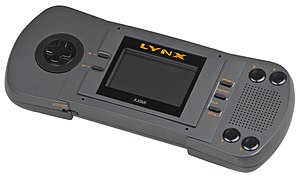 |
| Atari Lynx |
The 1990 passes without big changes on the market, the NES and the Amiga 500 are still the leaders in USA and EU respectively.
The Megadrive is gaining ground but very slowly with around 4 or 5 titles released every month. In 09/90 the Megadrive is released in EU.
In 11/90 the Nintendo Super Famicom is launched in Japan (Famicom is the Japanese name of the NES).
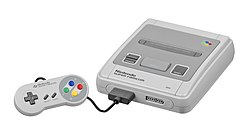 |
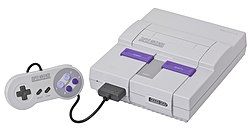 |
| Nintendo Super Famicom | Nintendo Super NES |
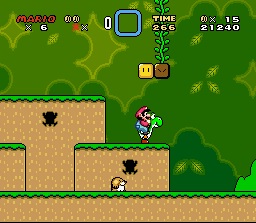
The system specifications are better than those of the Sega Megadrive, the launch titles are well received and clearly demonstrate the strong points of the hardware.
 |
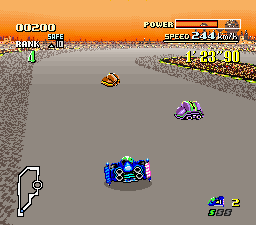 |
| Super Mario World (SNES) | F-zero (SNES) |
Around the same time the Panther Development System (“Introduction to the Panther Development System” November 17, 1990) is ready.
The 1991 is a decisive year, Sega is already in USA, Nintendo is coming and both are locking developers under exclusivity contracts.
At the start of 1991, after almost 2 years of work, some bugs are still present in the Panther chip (Some bugs related to the Palette Object are described in the “Introduction to the Panther Development System”) and the audio subsystem is still very sketchy. Probably another spin of the Panther chip and a more integrated audio subsystem is needed. On the Jaguar side, the Blitter is almost complete and work is starting on the custom RISC processor (see Jaguar’s netlist).
By 05/91 the Jaguar has the bulk of the work done and a refinement, enhancement and bug fixing phase is starting (see Jaguar’s netlist).
With such time pressure, and the Atari Jaguar development proceeding faster than expected, Atari decides to kill the Panther project because it would result in a launch too near to the launch of the Jaguar.
 |
| The project cancellation memo 05/91 (Atari museum) |
In 08/91 the Nintendo SNES is released in USA. Sega cuts the price of the Megadrive and releases the very successful “Sonic the Hedgehog”. The 16 bit war starts between Sega and Nintendo.
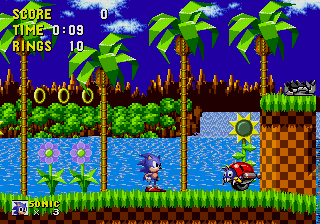 |
| Sonic the Hedgehog (Megadrive) |
It is only in late ‘92, with the release of the SNES in EU and the release of Super Street Fighter 2 for SNES, that the 16 bit market is completely mature and everyone wants one of these consoles.
Unfortunately the Jaguar is still in development after more than 3 years of work and more than 1 year since the Panther project was stopped.
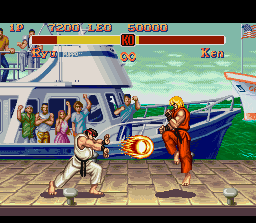 |
| Super Street Fighter 2 (SNES) |
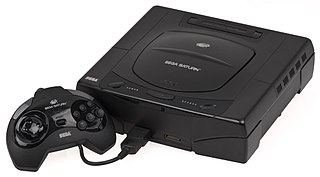
Eventually, the cartridge based Atari Jaguar is released in USA in 11/93 for $250, one year before its competitors: the CD based, Sega Saturn and the Sony Playstation.
The development lasted more than 4 years and around 30 months passed from closing the Panther project to releasing the Jaguar. By contrast, the Sega Saturn was developed in 2 years and the Sony PlayStation in just 1 year.
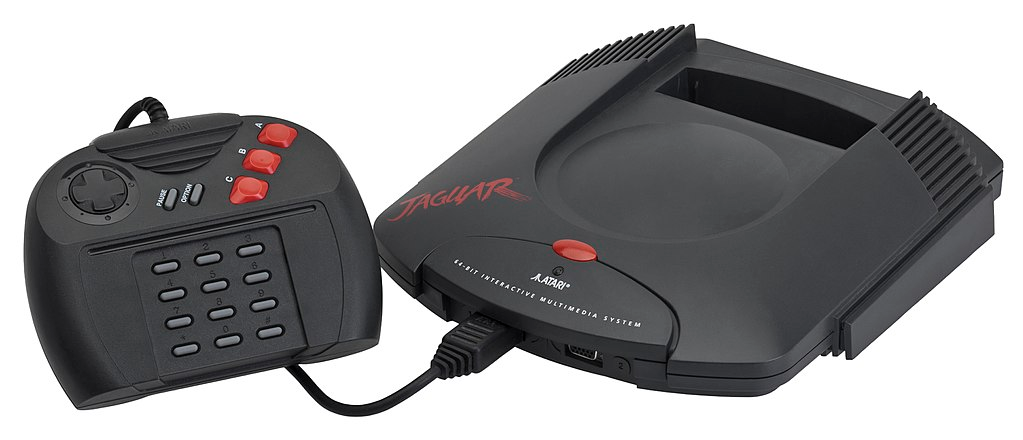 |
| Atari Jaguar |
 |
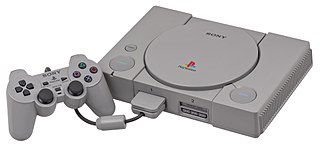 |
| Sega Saturn | Sony Playstation |
Being the first on the market doesn’t help the Jaguar. Sony’s huge investment buys the market and the developers pushing Atari and Sega out of the market.
Timeline
-
02/86 Nintendo NES released in US for $90
-
10/87 NEC PC Engine is released in Japan
-
07/88 World wide RAM shortage begins
-
10/88 Sega Megadrive is released in Japan
-
12/88 NEC PC Engine CD-ROM is released in Japan
-
01/89 Sega proposes to Atari to sell the Megadrive in US
-
03/89 Konix runs out of cash
-
Q1/89 Flare 2 is created. Panther and Jaguar design starts
-
04/89 SNK Neo Geo is released in Japan
-
06/89 World wide RAM shortage ends
-
08/89 Sega Genesis is released in US for $200
-
08/89 NEC TurboGrapx-16 is released in US
-
09/89 Atari Lynx is released in US
-
09/90 Sega Megadrive is released in EU
-
11/90 Nintendo Super NES is released in Japan
-
12/90 Nintendo NES is the leader in US and Japan, Commodore Amiga 500 is the leader in Europe
-
05/91 Atari kills the Panther project
-
06/91 Sega Megadrive price drops to $150
-
08/91 Nintendo SNES is released in US for $200
-
12/91 Sega Mega CD is released in Japan
-
06/92 Nintendo SNES is released in EU
-
10/93 3DO is released in US
-
11/93 Atari Jaguar is released in US for $250
-
11/94 Sega Saturn is released in US for $400
-
12/94 Sony Playstation is released in US for $300
-
09/95 Atari Jaguar CD is released
Closing
We know now the story of the Atari Panther. In the next article we will look at what is inside the console.